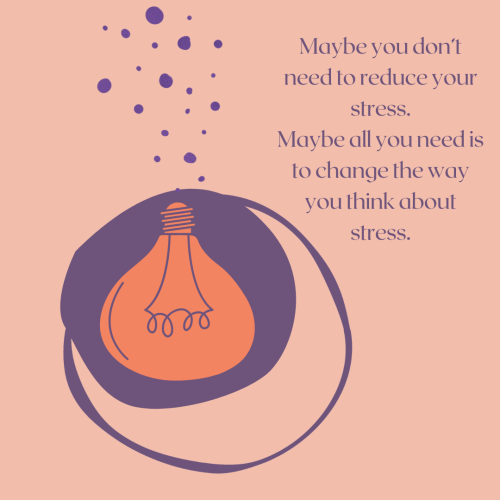
You’re spinning your wheels and putting out fires all day, kicking those longer-term and more fulfilling projects down the road over and over.
You feel behind in your work, like you’re always running to catch up.
By the time you close the laptop, there’s tension all over your body that carries over into being snappy with your family or having trouble falling asleep.
Some days you’re spiralling over a client email, and other days you can’t make yourself start anything at all.
But what you want is to be able to handle it without feeling anxious or overwhelmed.
As The Entrepreneurs’ Therapist™, many women entrepreneurs come to me feeling this way.
This post is for you if you’re a women entrepreneur or business owner who recognizes herself somewhere in all this. If you’ve been calling yourself lazy, disorganized, or “bad at this,” here’s a different explanation for the anxiety and overwhelm.
What does anxiety and overwhelmed look like in a business owner?
Anxiety and overwhelm show up in your emotions, your body, your mind and your behaviour. You might recognize a few of these:
Cognitive and emotional signs
- Worry.
- “I’m not good enough” thoughts
- Trouble focussing or making decisions.
- Spiralling feelings of dread.
Physical signs
- Sweaty palms
- Shortness of breath
- Digestive disruptions
- Trouble sleeping
Behavioural signs
- Procrastination
- Making “silly” mistakes
- “Analysis paralysis”
- Withdrawing from friends and family.
If you see yourself in this list, I invite you to remember that there’s nothing wrong with you. These are the signs of a system that’s carrying too much. If that sounds like you, here’s where you can learn more about working with me.
What’s the difference between anxiety and overwhelm for entrepreneurs?
Anxiety is a fight or flight response. Overwhelm is a freeze or collapse response. Both are signs that your nervous system is trying to protect you.
Take the analogy of a bunny (prey) and bear (predator). When the bunny perceives a threat, its nervous system has a number of responses.
With anxiety, your body revs up, preparing to run away, like the bunny runs from the bear. But in business, you can’t run away because there is no bear. So instead, your heart speeds up, your thoughts race, and you start wracking your brains for what might go wrong. For example, you might reread an email to a client six times before you hit sent.
With overwhelm, your body powers down. The bunny can’t run or fight, so it holds very still or even plays dead. In business, staying still, or playing dead, can look like this: you open your laptop, stare at the to-do list, unable to make any decisions, and an hour later you’ve done nothing and only feel worse. Or it can look like avoiding answering or even opening that client email, even when it’s not anything bad.
Many of my clients swing between the two over the course of a single week, tense and racing through a launch and then flattened for days afterward. That swing makes a lot more sense once you know what’s happening underneath it.
Why do so many women entrepreneurs feel overwhelmed?
Overwhelm happens when demand outstrips capacity. For women, entrepreneurs, demand and capacity both are affected, not only by personal resources and resilience, but also by external conditions, and systems that aren’t made for them.
It’s not just the “usual” entrepreneurial stress. It’s a perfect storm of systemic, disadvantages, compounded by biology and society,” rights Nonie White in UK Entrepreneur.
Numbers back this up. In a 2025 survey of nearly 250 women founders, 61% named having too much to do and two little time as their main barrier to success.
Demand
You’re building a business and running it too. A bookkeeper is still closing month-end for her clients while she tries to hire an assistant. Maintaining operations while also growing the business at the same time – or even just bringing in enough coins to stay stable – is two jobs, and most women entrepreneurs are only paid for one.
A double or triple load. Many women entrepreneurs are raising kids, caring for ageing parents, and running a household. Research consistently find that women do more unpaid and caregiving work than men do. Research also shows work family conflict is more prevalent for women than men not only because of the imbalance in unplayed labor, but also because of the expectations that women will do that work– despite whatever else they be doing.
Capacity
You’re short on boundaries and systems. When every request lands on you and you alone and nothing is written down, your brain becomes the hard drive—except it’s not a passive storage device. It’s always searching and calculating and processing, all of which takes energy and depletes your capacity.
Have to work harder to be taken seriously. Women business owners regularly report needing to work long hours and provide more proof to get the same respect. In venture funding, the numbers tell a shocking story. One woman, Anu Duggal, needed 700 meetings to hit her funding goal. In 2021, Black female founders raised less money than any other demographic despite the fact that they averaged 57% more investor meetings than their peers and still raised less money than any other group.
You’re short on cash which means you’re short on everything. When money is tight, so is the support you can hire, the time you protect the time you can protect, and the headspace you have left at the end of the day.
Why does running a business cause so much anxiety?
Anxiety is mobilization. Your nervous system, like the bunny, gears up to meet a threat, and running a business means the threats are constant.
Income that changes, month-to-month, a client who goes silent, a staff member you need to let go, a launch that might flop. A study of women entrepreneurs across EU countries found that uncertainty about profits, worry about business survival, deadlines, and trouble navigating work demands with family demands raise the likelihood of anxiety.
Stress and anxiety aren’t the same thing, although stress and anxiety symptoms are nearly identical. Stress usually eases once the deadline passes. Anxiety tends to hang around, not connected to one specific issue or event. It can show up as sleepless nights, irritability, and second-guessing every decision.
For entrepreneurs with a trauma history, it can take less stimulation to set off a nervous system survival response. Demands or threats, like a late payment or a curt email, can land with the full weight of something that happened decades ago, because your body can’t always tell then from now. ADHD can add another layer, making it harder to shift gears once the alarm is going.
What is emotional capacity, and how do you build it?
Emotional capacity is how much stress, uncertainty and emotion you can hold while still thinking clearly and acting in line with your values.
You build emotional capacity in two ways: by widening what your nervous system can handle and by lightening the load it’s carrying.
On the capacity side, you might start by noticing your earliest signals. A quick body scan or even a few breaths can shed light on how you’re doing. Checking in with yourself on a regular basis can enable you to catch things early, giving you more choice about what happens next.
On the demand side, you might look at what’s truly yours to carry. That could mean a boundary with a client whose values don’t fit, a system so you’re not holding everything in your head, or finally letting that staff member go even though you like them personally.
Picture a client who loses her biggest contract on a weekday morning. Old pattern: she spirals, can’t eat, cancels everything (even revenue-generating meetings) and sends three anxious emails before lunch. New strategy: she notices her chest feels tight, names that: “It’s OK. My nervous system is activated. It’s just trying to protect me.”, takes a walk, and makes the follow up call that afternoon with a steady voice.
This is the logic between the Entrepreneur Mental Health and Business Plan™ that guides you to track and evaluate both capacity and demand. I developed it in 2021 for a San Diego startup incubator. The Entrepreneur Mental Health and Business Plan™ treats your well-being the way you treat cash flow, with indicators you check every week, because your mental health is a core business asset.
How does therapy help entrepreneurs with anxiety and overwhelm?
Therapy helps by working on both levels together, calming the alarm in your body and changing the conditions that keep setting it off. Therapy is where you get to understand why you react the way you do, and practice doing something different.
As The Entrepreneurs Therapist™, supporting women business owners, I bring two kinds of experience into our work together. I’m an experienced mental health professional, and I’m an entrepreneur with over 30 years of experience running my own businesses. My work is trauma informed, nervous system aware, and neurodivergence affirming, drawing from my training in somatic parts work, trauma therapy, Financial Social Work, and the Trauma of Money® method.
In practice therapy looks like:
- Caring for your emotions (in the moment as well as ongoingly) so a business crisis doesn’t send you into a spiral.
- Untangling past memories and behaviour patterns from personal day business decision decisions.
- Working through the guilt and fear that make boundaries and delegation so hard.
- Separating self-worth from your business success so you can sleep at night.
I guide much of this using my Root, Reveal, Reshape, Rise framework. You can read more about how I work on my work with me page.
Key takeaways
- Anxiety is a fight or flight response. Overwhelm is a freeze or collapse response.
- Both are protective.
- Women entrepreneurs face extra pressures that drive both anxiety and overwhelm.
- Emotional capacity grows when you build regulation skills and reduce your load.
- A therapist who understands business can support you to address both at once.
Frequently asked questions
Is it normal to feel anxious as a business owner?
Yes. It’s very common. Survey data suggests most women founders experience persistent anxiety. Common doesn’t mean you have to live with it, though, and support can make a significant difference.
How do I know if I’m burnt out or just anxious?
Anxiety usually feels wired and restless, while burnout feels depleted and detached. Burnout often follows long stretches of anxiety and overwhelm with no recovery. If you’re running on empty and nothing refills you, it’s worth talking to a professional.
Do I need a diagnosis to see a therapist for business anxiety?
No. You can come to therapy because running your business is affecting your sleep, your relationships, or your sense of yourself, or even if you can’t name what’s bothering you. Many extended healthcare plans in Ontario cover services from a registered social worker so it’s worth checking yours.
How long does it take to feel less overwhelmed?
Many people notice some relief within the first few sessions, once they have language for what’s happening, and a couple of tools to use in the moment. Deeper change, like shifting long standing patterns around money or boundaries, takes longer and depends on what you’re bringing with you from your past.
What’s the difference between a business coach and a therapist for entrepreneurs?
A business coach usually focusses on strategy and goals. A therapist can work with the emotional and trauma related patterns that get in the way of those goals.
Where to go from here
I’d love to hear what’s going on for you. I work online with women entrepreneurs in Ontario Ontario. You can book a free call at Shula.ca.